


Aspect Structure (formerly, GT Strudl) Structural Modeling, Analysis & Design
For almost 40 years Aspect Structure (formerly, GT Strudl) has been one of the most widely accepted computer-aided engineering and design tools for structural analysis and design. It is trusted and used globally by thousands of engineers to deliver accurate results, quickly and efficiently.
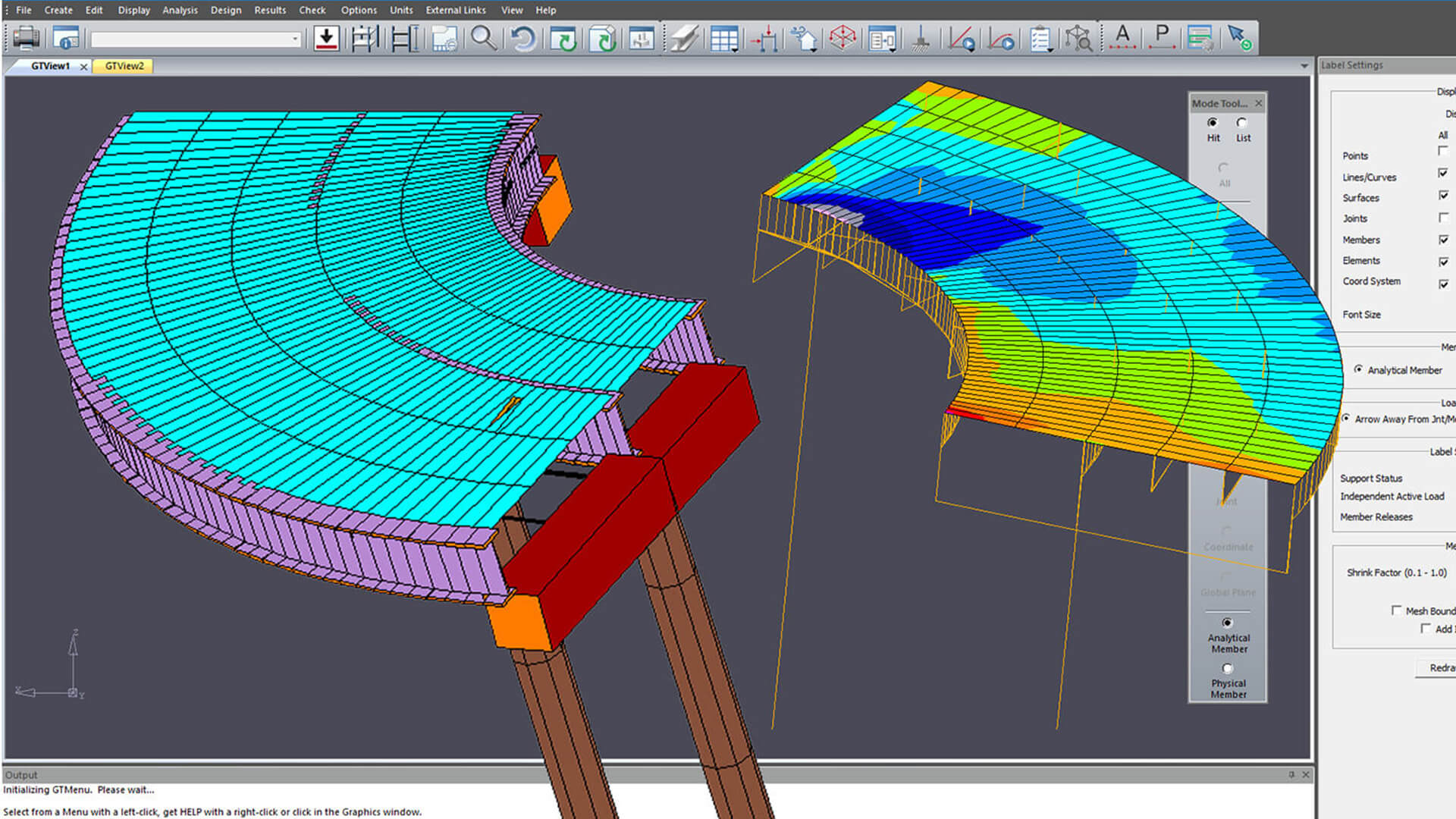
Proven Track Record
Aspect Structure (formerly, GT Strudl) is one of the most widely used fully-integrated and adaptable structural analysis solutions in the world. The software has a proven track record in a variety of applications such as: nuclear and conventional power generation, on- and off-shore facilities, marine, civil and infrastructure, and others. Aspect Structure (formerly, GT Strudl) is capable of supplying engineers with accurate and complete technical data for efficient and engineering and design decision making. Aspect Structure (formerly, GT Strudl) is a market leader in its field for quality, reliability, and technical support.
Nuclear Quality Assurance
Since 1983 the Quality Assurance and Quality Control (QA/QC) program and procedures Aspect Structure (formerly, GT Strudl) have been some of the industry’s most rigorous, and have been in full compliance with applicable provisions of the U.S. NRC’s 10CFR21and 10CFR50 Appendix B regulations. In addition, Aspect Structure (formerly, GT Strudl) QA procedures are in full conformance to the ASME NQA-1-2008 including the 2009 Addenda Subpart 2.7 (NQA-1a-2009). The QA/QC program and procedures of Aspect Structure (formerly, GT Strudl)are routinely audited by independent auditors from nuclear industry corporate licensees several times each year, and by auditors representing NUPIC (Nuclear Procurement Issues Committee) and NIAC (Nuclear Industry Assessment Committee) on a three year cycle. Each version of Aspect Structure (formerly, GT Strudl), is validated and verified (V&V) for its computational quality and performance by the execution of over 350 base verification test problems that are documented in the four volume Base Verification Manual, and by the execution of approximately 4,700 general verification test problems for a total of over 5,000 V&V test problems.